

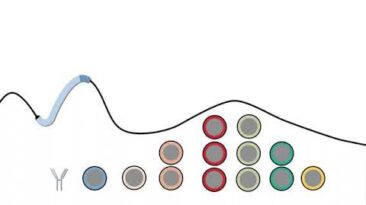
Tumors are usually of clonal origin, that is, they arise from a single cell. The monoclonality of tumors can be seen, for example, in multiple myeloma, a tumor of the...
Archive - Oktober 2021

The passage of a cell through the cell cycle is regulated by various proteins. Cyclin dependent kinases (CDKs) phosphorylate several substrates such as transcription...
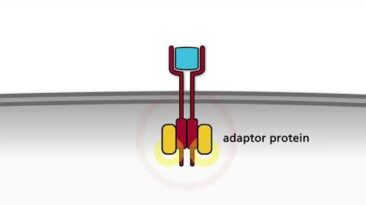
The general principles of signal transduction can by compared to air traffic between different countries, where countries symbolize the cells and airplanes carrying...
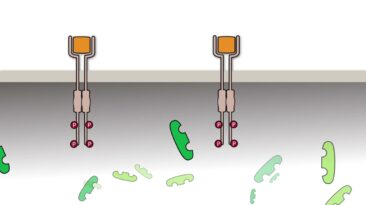
The most important family of receptor tyrosine kinases is the family of the receptors for EGF (Epidermal Growth Factor). Activation of the EGF receptor tyrosine kinase...
Onkoview 2015
The EGF receptor tyrosine protein kinases and the therapy of tumors with activated EGF receptors – Part 1: Inhibition of receptor activation via antibodies
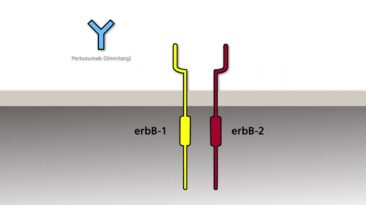
In many tumors, EGF receptors are over-activated, which leads to a stronger signal and a high rate of proliferation. In order to inhibit the signal and to reduce the...
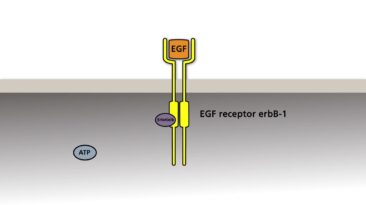
Onkoview 2015
The EGF receptor tyrosine protein kinases and the therapy of tumors with activated EGF receptors – Part 2: Blocking of EGF receptor signaling via tyrosine kinase inhibitors
Tumors with activated EGF receptors can be treated with drugs that inhibit the kinase activity by binding to intracellular domains. Most of these drugs are ATP analogs...
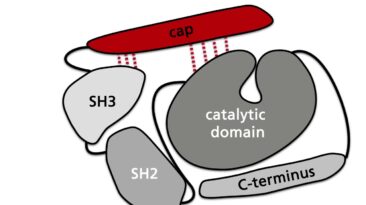
The gene product of the BCR-ABL1 fusion gene is a kinase with a higher activity compared to the activity of the native ABL1 kinase. The analysis of the protein structure...
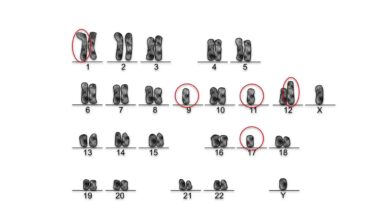
More than 50 years ago, researchers detected typical chromosomal abnormalities in blood cells of patients with chronic myeloid leukemia (CML). These are an unusually...
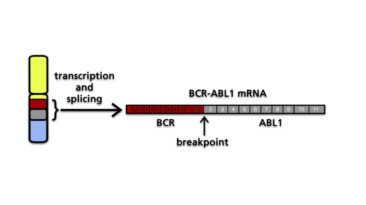
The Philadelphia chromosome, which is found in leukemic cells in more than 90% of all patients with chronic myeloid leukemia (CML), results from a translocation between...
Onkoview 2015
BCR-ABL1 and the Philadelphia chromosome – Part 4: Therapy of tumors with BCR-ABL1 fusion proteins
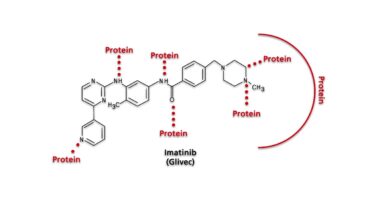
The specific BCR-ABL1 inhibitor molecule Glivec was the first anti-cancer drug to be developed against a tumor-specific protein. Glivec binds to the catalytic domain of...