


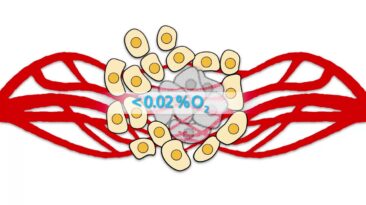
Cells within growing tissues need a constant supply of oxygen. Under physiological conditions, the delivery of oxygen is well regulated; under pathological conditions...
Onkoview 2015
Hypoxia Inducible Factors (HIFs), Part 2: Regulation of HIF under normoxic and hypoxic conditions
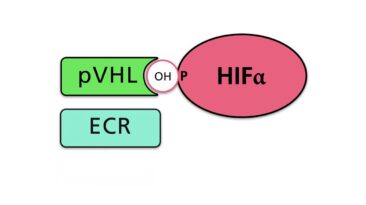
The Hypoxia Inducible Factor (HIF) is a transcription factor, which consists of an a and a β subunit. One of three α subunits dimerizes with one of two β...
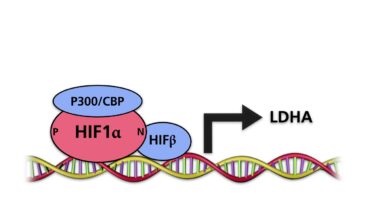
The SCLC2A1 gene, which encodes a type 1 glucose transporter (GLUT1), responds to both HIF1α and HIF2α. Thus, both factors increase the cellular uptake of...
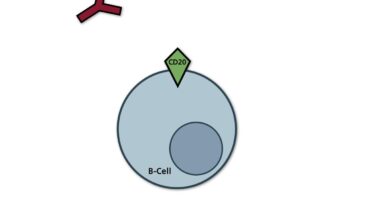
In the context of cancer therapy, antibodies produced outside the patient are used which are directed against secreted factors, membrane receptors or surface antigens of...

The phosphatase PTEN dephosphorylates PIP3 to PIP2, which can then be hydrolyzed to DAG and IP3. In addition, PTEN performs many other functions by binding to and...
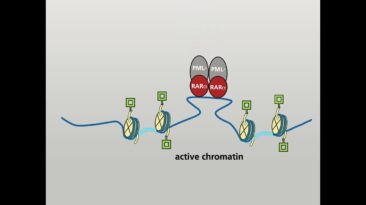
The naturally occurring retinoic acid isomers 13-cis-retinoic acid and all-trans-retinoic acid (ATRA) influence processes of morphogenesis and differentiation. The...
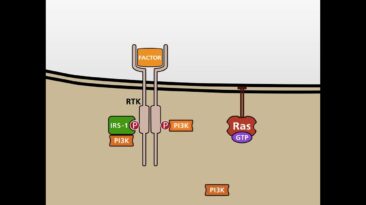
The phoshatidylinositol-3 kinase (PI3K) can be activated by binding directly or via the protein IRS-1 to the activated receptor tyrosine kinase. Alternatively, PI3K can...
Onkoview 2010
Effects of proteinases with metalloproteinase domains (MMPs, ADAMs) on tumour progression
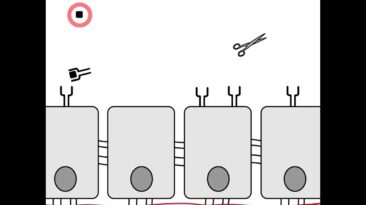
By degradation of cell adhesion molecules, metalloproteases increase the motility of epithelial cells. Growth factors, which are bound to the plasma membrane, are...
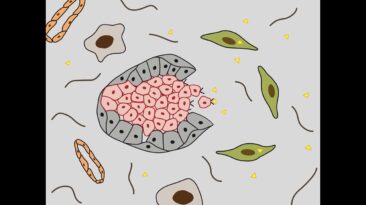
Epithelial cells are in contact with the extracellular matrix. This video shows the acinus of a mammary gland surrounded by connective tissue. Fibroblasts, macrophages...
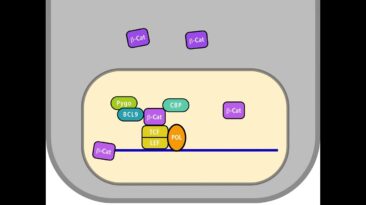
In normal cells without a Wnt signal a cytosolic destruction complex phosphorylates the signaling protein b-catenin leading to its degradation. In the presence of...