
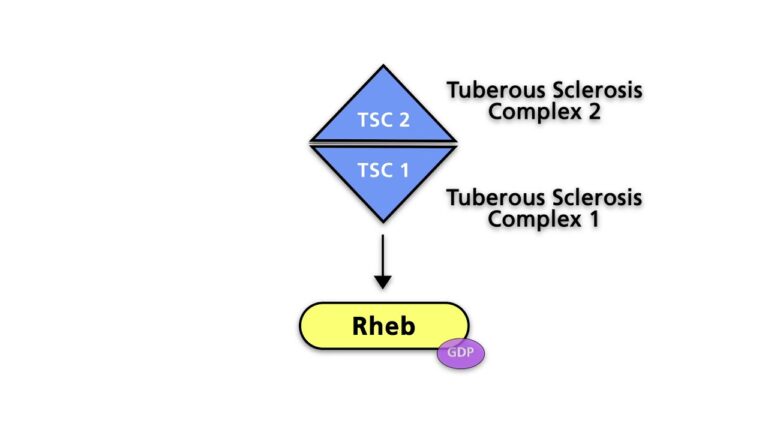
In tumor cells of patients with congenital hamartoma syndromes such as Cowden syndrome (CS), tuberous sclerosis complex (TSC) syndrome and Peutz-Jeghers syndrome, the phosphatidylinositol 3-kinase (PI3K) and the mammalian target of rapamycin complex 1 (mTORC1) are overactivated. Major...
Layout A (with pagination)
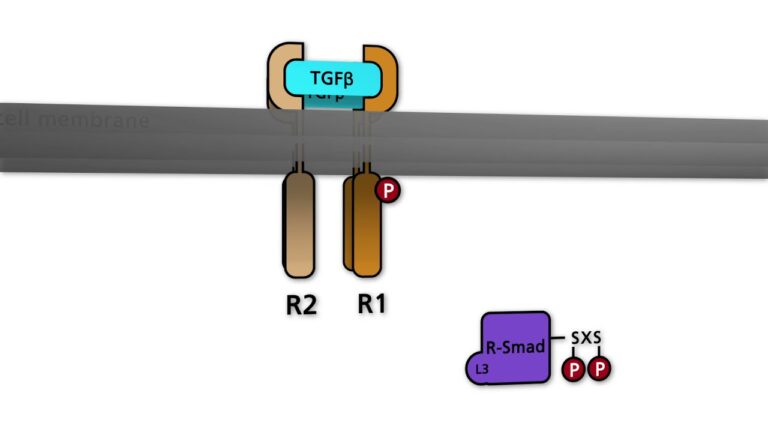
The TGF-beta superfamily comprises several different extracellular factors. The factors bind to and activate the membrane-bound TGF-beta receptor, which is a serine-threonine kinase. Autophosphorylated and thereby activated TGF-beta receptor activates Smad proteins, which transmit the...
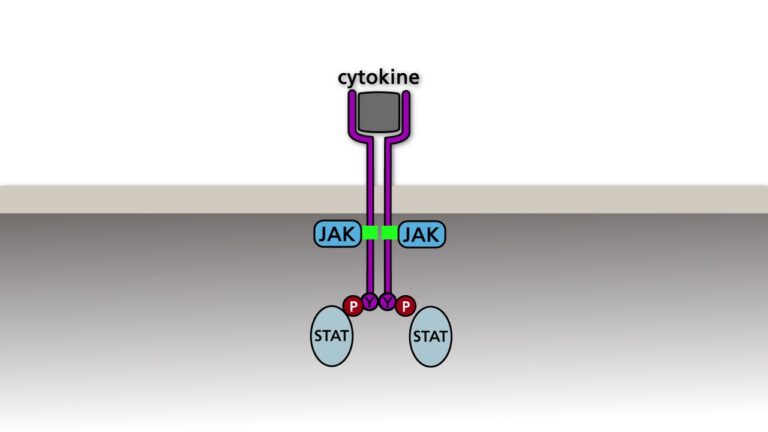
The JAK/STAT pathway begins with the activation of a membrane bound cytokine receptor by interferon or another cytokine. The activated receptor recruits and activates intracellular tyrosine kinases of the JAK family. Active JAKs phosphorylate STAT proteins, which then dimerize, enter the...
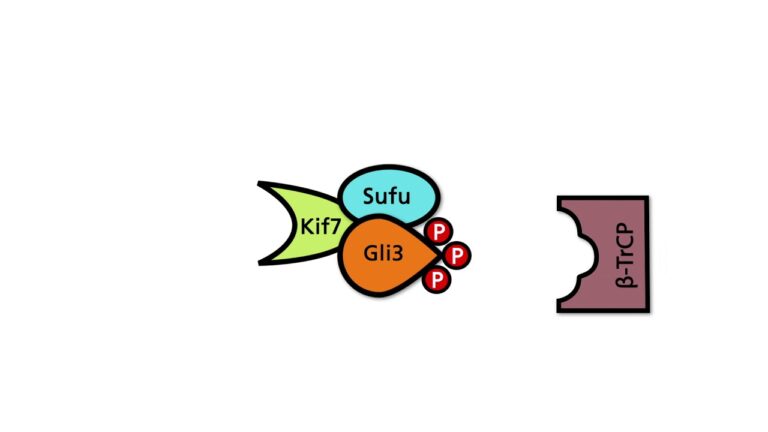
In normal cells, activation of the hedgehog signaling pathway begins with the binding of the extracellular hedgehog protein to the membrane receptor Patched. The activation of Patched overcomes the blockage of the membrane receptor Smoothened. Active Smoothened is able to activate Gli2...
Onkoview 2015
The hedgehog signaling pathway – Part 2: Activation of the Hedgehog pathway in basal cell carcinoma and medulloblastoma
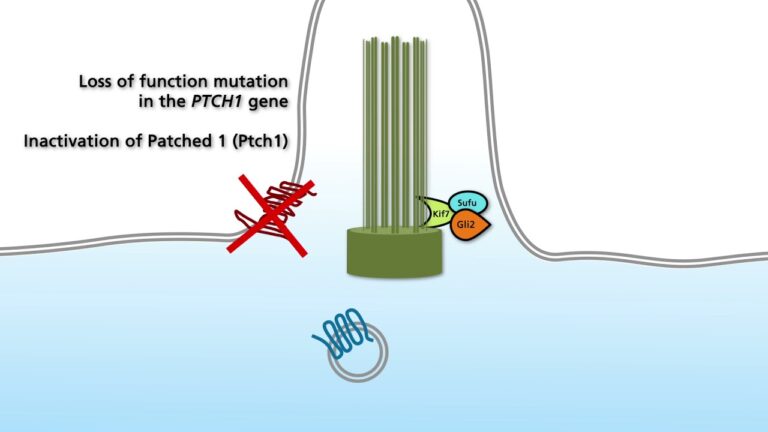
The hedgehog signaling pathway is constitutively active in cells of basal cell carcinoma and medulloblastoma. This activation is caused by the mutational inactivation or the deletion of the Patched-coding gene PTCH or by activating mutations in the gene SMO, which codes for Smoothened...